How to Use Peptide Materials in Scientific Research?
Peptide materials have gained significant attention in scientific research. They offer unique properties that can enhance various applications. Dr. Emily Carter, a leading expert in peptide synthesis, once stated, "Peptide materials unlock new possibilities in biomaterials and drug development." This highlights their pivotal role in advancing science.
Researchers are exploring peptide materials in drug delivery, tissue engineering, and diagnostics. Their ability to interact with biological systems makes them invaluable. However, the journey is not without challenges. Often, the synthesis of peptide materials can be complex and costly. Furthermore, stability and bioactivity are critical factors that need constant evaluation.
Incorporating peptide materials into research can lead to breakthroughs. Yet, one must approach this with caution. Not every peptide will perform as expected. Continuous exploration and adaptation are essential in this evolving field. Addressing these hurdles can refine their application in real-world scenarios.

Understanding Peptide Materials and Their Properties
Peptide materials are fascinating tools in scientific research. They are short chains of amino acids. Their structures allow for diverse functions. Understanding peptide properties is crucial for effective application. These materials can fold into unique shapes, influencing their activity. Research shows that even small alterations in sequences impact performance.
In labs, scientists often experiment with different peptide combinations. This trial-and-error process can be frustrating. Results may vary significantly, sometimes failing to meet expectations. The behavior of these peptides is influenced by their environment. Solvent choice, temperature, and pH levels play important roles. Researchers must be attentive to these factors when conducting experiments.
Powerful applications arise from understanding peptides. They serve in drug development and biomaterials. However, the road is not without challenges. Some peptides degrade quickly, limiting their use. More exploration is needed to enhance stability. Each step forward opens new avenues but also prompts further questions. The complexity of peptide behavior requires ongoing reflection and research.
Types of Peptide Materials Used in Scientific Research
Peptide materials play a vital role in scientific research. They are used in various fields, including drug development and biotechnology. Different types of peptides have unique properties that make them versatile tools for exploration.
Synthetic peptides are artificially created. Researchers often use them to study protein interactions. These peptides can mimic natural sequences. Their simplicity allows for easy modification. This can lead to new therapeutic approaches.
Natural peptides, on the other hand, are derived from living organisms. They may show biological activity or possess antimicrobial properties. Both types can be combined or modified to enhance their functions.
In studying peptide applications, challenges arise. Sometimes, the effectiveness of peptides varies. Not all peptides exhibit the desired bioactivity. Researchers must continuously refine their methods. Analyzing the structure-activity relationship is crucial. Testing different sequences requires patience. Yet, these challenges drive innovation and discovery. Each attempt brings valuable insights, shaping the future of research.
Methods for Synthesizing Peptide Materials
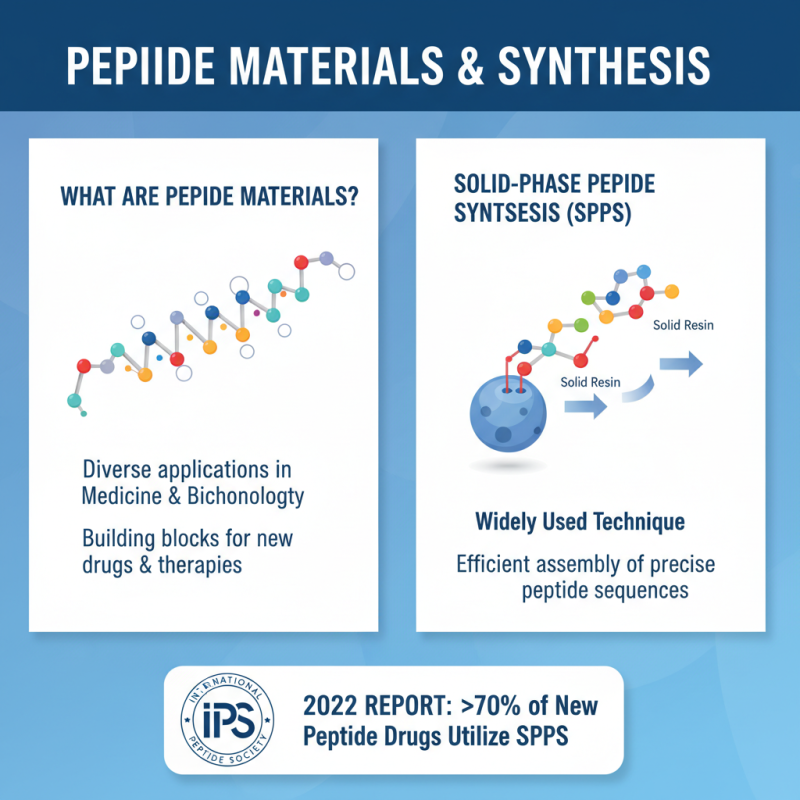
Peptide materials have gained prominence in scientific research due to their diverse applications in fields like medicine and biotechnology. One key focus is on the methods for synthesizing these materials. Solid-phase peptide synthesis (SPPS) is among the most widely used techniques. It allows for the efficient assembly of peptides with precise sequences. A 2022 report from the International Peptide Society noted that over 70% of new peptide drugs utilize SPPS.
Another important method is liquid-phase synthesis. This approach is beneficial for producing larger peptides. However, it can sometimes lead to lower yields and more complex purification processes. Researchers need to balance yield and complexity. A significant challenge is achieving purity levels above 95% while maintaining sequence fidelity. Recent studies indicate that up to 30% of synthesized peptides may have sequence errors, which can impact their functionality.
Microwave-assisted synthesis is an emerging technique that speeds up peptide formation. This method can reduce synthesis time from days to hours. However, it may introduce uneven heating, affecting peptide quality. It's crucial for researchers to assess the reproducibility of their synthesis methods. As the field progresses, continuous improvement in techniques will remain a priority.
Applications of Peptide Materials in Various Scientific Fields
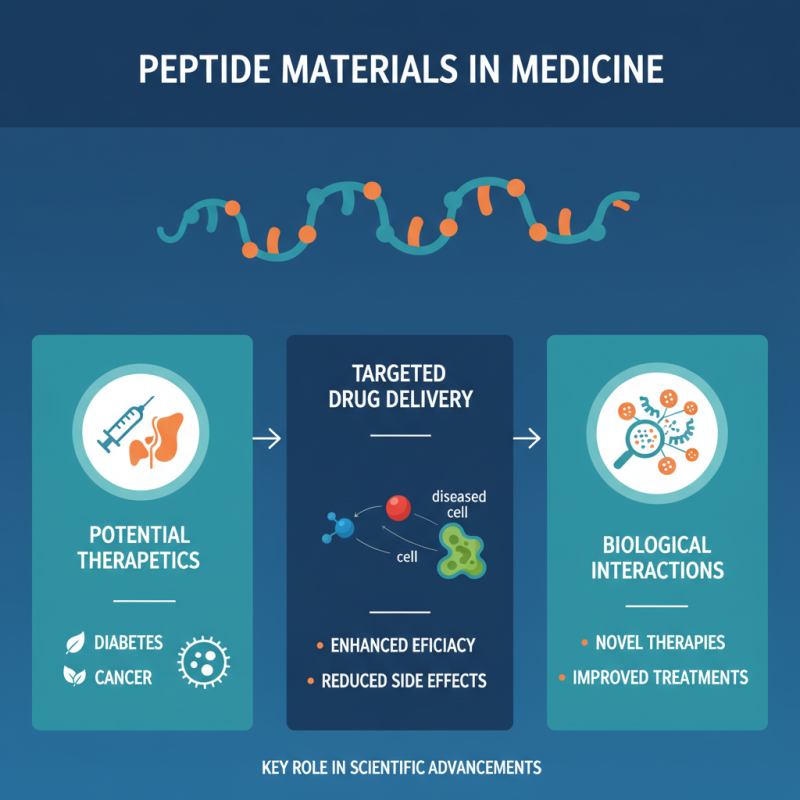
Peptide materials have become essential in various scientific fields. In medicine, they serve as potential therapeutics for diseases like diabetes and cancer. Researchers use peptides to create targeted drug delivery systems. This enhances treatment efficacy while reducing side effects. Understanding how peptides interact with biological systems is crucial. It can lead to novel therapies or improve existing ones.
In materials science, peptides play a significant role in developing biomaterials. Their unique properties allow for the creation of hydrogels and scaffolds for tissue engineering. These materials can mimic natural tissues closely. This is vital in regenerative medicine, where the body’s own repair mechanisms can be leveraged. Experimentation with different peptide sequences can yield diverse material characteristics.
Tip: Keep an open mind during research. Often, unexpected results provide valuable insights. Don’t hesitate to explore unconventional applications of peptides. They may lead to revolutionary discoveries. Experimentation can sometimes feel frustrating, but it’s part of the learning process. Pay attention to small details; they often hold the keys to breakthroughs.
Best Practices for Handling and Storing Peptide Materials
Handling peptide materials requires careful consideration. Proper storage is essential for maintaining their integrity. Peptides should ideally be kept at low temperatures, typically below -20°C. Use airtight containers to prevent moisture exposure. Avoid repeated freeze-thaw cycles, as they can degrade peptides.
When preparing peptide solutions, ensure cleanliness in your workspace. Use sterile techniques to avoid contamination. Dilute peptides in appropriate solvents. Keep solutions cold and use them promptly. Any remaining solution should be discarded after use. This prevents contaminants from compromising your research.
Regularly review storage procedures and ensure compliance with best practices. It’s easy to overlook some details, like label clarity or expiration dates. Always reassess your methods. Mistakes may happen, and reflections on past experiences can improve future handling. Monitoring these practices can lead to better results in scientific research.