What Are the Uses and Benefits of Pharmaceutical Chemical Powder?
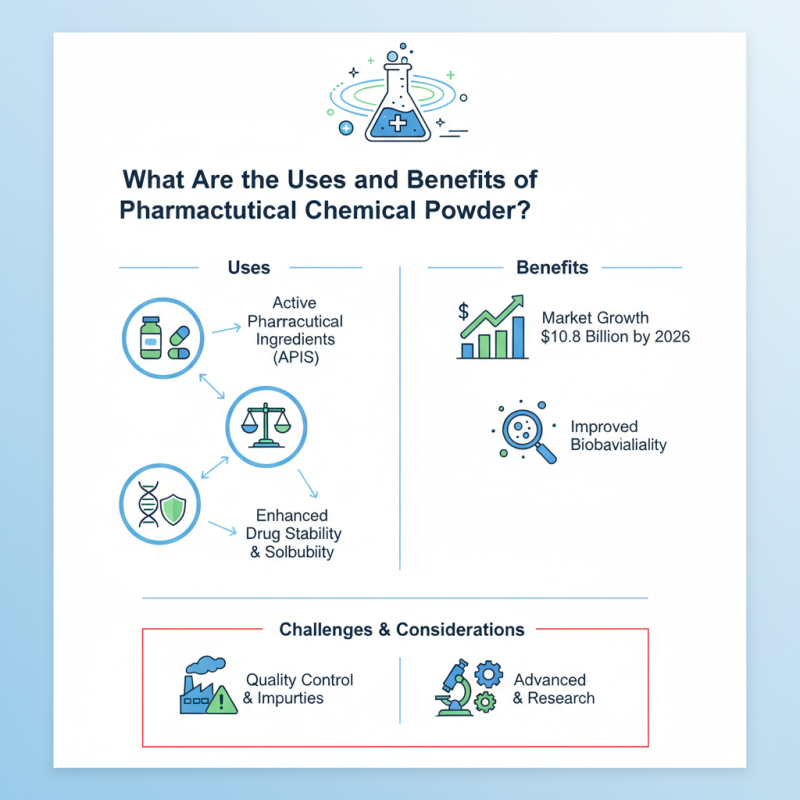
Pharmaceutical Chemical Powder plays a crucial role in modern healthcare. It is an essential component in the formulation of various medications. According to a recent report by Grand View Research, the global pharmaceutical excipients market is projected to reach $10.8 billion by 2026. This growth highlights the increasing need for effective pharmaceutical chemical solutions.
Among the uses, Pharmaceutical Chemical Powder is pivotal in creating active pharmaceutical ingredients (APIs). These compounds are critical for drug efficacy and safety. For instance, powders allow for precise dosing and enhance drug stability. The fine particle size often found in these powders improves solubility, which is vital for bioavailability.
However, challenges exist. Quality control can be complex. Impurities in the powders can lead to adverse effects. Industries must invest in advanced technologies to ensure purity. Continuous monitoring and research are essential to address these concerns. Thus, while the benefits are significant, careful consideration is necessary to fully realize the potential of Pharmaceutical Chemical Powder in healthcare.
Definition of Pharmaceutical Chemical Powder and Its Composition
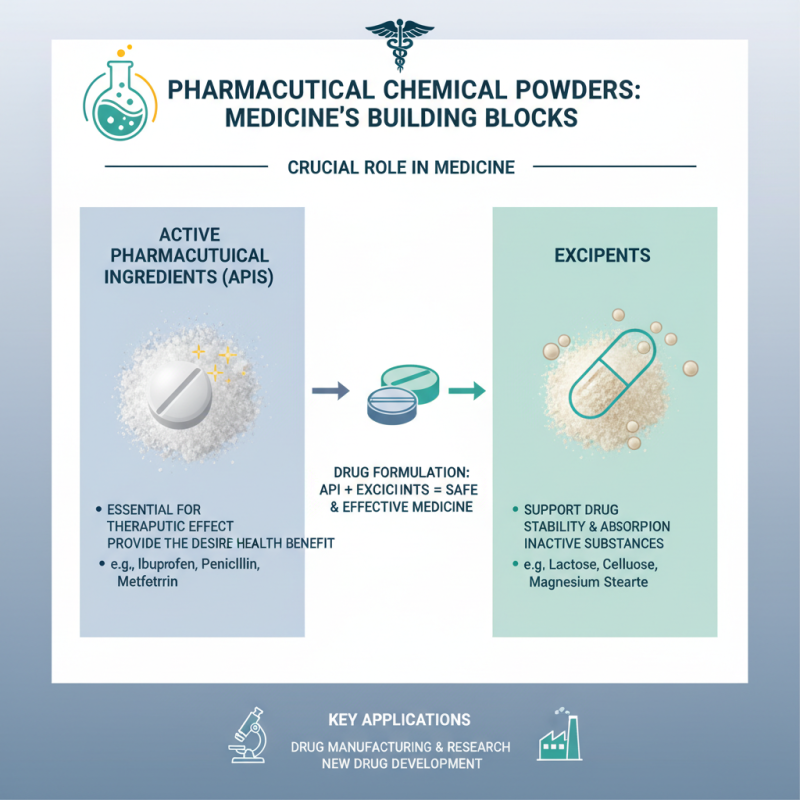
Pharmaceutical chemical powders are crucial in the healthcare industry. They consist of active pharmaceutical ingredients (APIs) mixed with excipients. These powders can be derived from natural sources or synthesized in laboratories. Their composition affects how drugs act in the body.
The purity of these powders is vital. Impurities can alter drug efficacy and safety. This raises concerns about production practices. Manufacturers must ensure high standards. Often, production is complex and requires strict quality control measures. It's not always straightforward, as variations in raw materials can occur.
These powders must meet specific regulations, which can change over time. The ever-evolving landscape can be challenging for companies. They need to stay informed about best practices and compliance. Often, organizations overlook some details. This can lead to larger issues down the line. Emphasizing education and training is essential in this field.
Uses and Benefits of Pharmaceutical Chemical Powder
Common Types of Pharmaceutical Chemical Powders and Their Applications
Pharmaceutical chemical powders play a crucial role in medicine. They are used in various applications, ranging from drug formulation to research. Common types include active pharmaceutical ingredients (APIs) and excipients. APIs are essential for the therapeutic effect. Excipients, on the other hand, support the stability and absorption of the drug.
Common pharmaceutical powders like paracetamol or ibuprofen serve as pain relievers. These powders can be formulated into tablets or liquids. Another notable example is antibiotics, which are vital for treating infections. They must be precisely measured to ensure effectiveness and safety. Research chemicals also benefit from powder forms, as they allow for easier handling and dosing.
However, using pharmaceutical powders isn't without challenges. The quality and purity of the powder can vary. This inconsistency may affect drug performance. Proper storage is needed to maintain their efficacy. Awareness of these issues is essential for manufacturers and researchers alike. Reflecting on these challenges can lead to better practices in the pharmaceutical industry.
The Role of Pharmaceutical Chemical Powders in Drug Formulation
Pharmaceutical chemical powders play a crucial role in drug formulation. These powders serve as the foundation for various medications, influencing their effectiveness and stability. They improve the uniformity and accuracy of doses. For instance, active pharmaceutical ingredients (APIs) often exist as powders, allowing precise control during manufacturing.
In drug development, the choice of powder is critical. The physical properties, like particle size and solubility, affect how drugs are absorbed in the body. Different powders can lead to varied therapeutic outcomes. When formulations do not perform as expected, it raises questions. Were the right powders used? Was the mixing process effective?
Additionally, the integration of these powders into solid dosages or suspensions can be challenging. Proper techniques must be employed to ensure consistency. Inadequate blending may result in uneven distributions. Such inconsistencies can affect patient safety and therapeutic efficiency. This highlights the importance of meticulous formulation practices. Researchers often need to reevaluate methods to ensure quality and safety in pharmaceutical products.
What Are the Uses and Benefits of Pharmaceutical Chemical Powder?
| Chemical Powder |
Uses |
Benefits |
Formulation Type |
| Active Pharmaceutical Ingredients (APIs) |
Used in the formulation of medications |
Provides therapeutic effects |
Tablet, Capsule |
| Excipients |
Provides bulk and stability |
Enhances drug delivery |
Syrup, Suspension |
| Binders |
Helps in tablet formation |
Improves tablet consistency |
Tablet |
| Coatings |
Protects the drug from the environment |
Enhances patient compliance |
Tablet, Capsule |
| Flavoring Agents |
Improves taste of oral medications |
Increases acceptance among patients |
Syrup, Suspension |
Benefits of Using Pharmaceutical Chemical Powders in Healthcare
Pharmaceutical chemical powders play an essential role in modern healthcare. These powders serve various purposes, making them valuable in medical treatments. They can be used to formulate medications in a precise manner. This leads to better dosing and improved patient outcomes.
One of the key benefits is their dosage flexibility. Healthcare providers can adjust the concentration based on individual patient needs. This is vital for patients requiring special care, such as children or the elderly. These powders also help in understanding the chemical properties of the drugs. However, there are challenges too. Improper handling can lead to contamination or dosage errors.
Another advantage is their stability. Many pharmaceutical powders exhibit a longer shelf-life compared to liquid forms. This means medications can be stored easily, reducing waste.
Nevertheless, the importance of thorough training for healthcare professionals cannot be overstated. They must be aware of the risks and best practices for handling these substances. Ensuring safety is crucial in maximizing the benefits of pharmaceutical chemical powders.
Safety and Regulatory Considerations for Pharmaceutical Chemical Powders
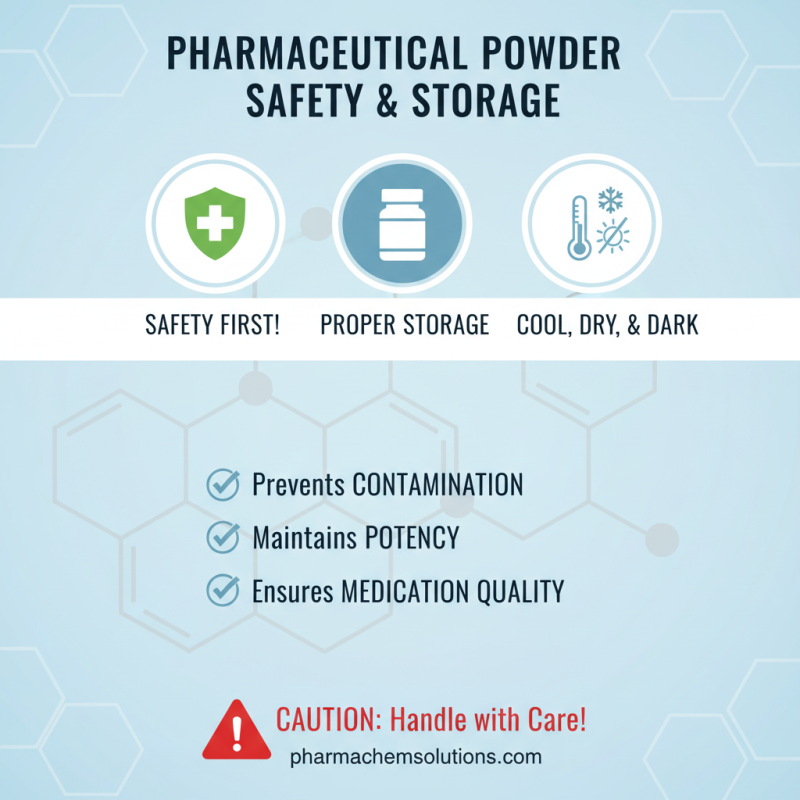
Pharmaceutical chemical powders play a crucial role in medication development. However, safety is paramount when handling these substances. Proper storage is essential. They must be kept in a cool, dry place, away from light. Contamination can easily occur if not stored correctly.
Regulatory considerations are strict. Each chemical must meet safety standards before it reaches the market. This ensures consumer safety and efficacy. Manufacturers must conduct thorough testing. Documenting results is important, yet sometimes overlooked. This can lead to complications.
Employee training is another critical aspect. Workers should understand the potential hazards associated with these powders. Proper protective equipment is necessary, but it is not always used. Regular audits can help identify training gaps. Continuous improvement in safety practices is needed in this field.