Top 10 Pharmaceutical Chemicals in China You Should Know?
Pharmaceutical chemicals play a crucial role in the healthcare industry. China is a leading manufacturer and supplier of these essential compounds. The vast range of pharmaceutical chemicals produced in the country has significant implications for global supply chains and medical advancements.
As the demand for quality healthcare rises, understanding the top pharmaceutical chemicals in China is essential. These chemicals are vital for developing medications and treatments. Familiarity with these substances can enhance awareness of their applications and potential impacts on public health.
However, it’s important to recognize that not all pharmaceutical chemicals are well-known or well-understood. Some may carry risks if mismanaged. This list of top pharmaceutical chemicals aims to provide a clearer picture of this dynamic industry. Knowing these key compounds can help in making informed decisions in various sectors, from research to consumer health.
Overview of the Pharmaceutical Industry in China
The pharmaceutical industry in China has rapidly evolved. It now stands as a global powerhouse. With robust research and development, the country plays a crucial role in drug manufacturing. China produces a vast array of pharmaceutical chemicals. The diversity supports both domestic needs and international markets.
Many companies focus on generics and active pharmaceutical ingredients (APIs). Quality control remains a challenge as some facilities do not meet international standards. This discrepancy calls for increased vigilance in assessing manufacturers. Industry experts often emphasize the importance of due diligence. Knowing the background of suppliers is essential for companies looking to enter the market.
Tips for navigating the pharmaceutical sector in China include understanding regulatory frameworks. Familiarizing yourself with local compliance rules is vital. Additionally, consider building relationships with trusted local advisors. They can guide you through complex market dynamics. Staying informed about industry trends and emerging chemicals is crucial for remaining competitive.
Key Features of Pharmaceutical Chemicals
Pharmaceutical chemicals play a crucial role in drug development and production. They are the building blocks for various medications. Understanding their key features is essential for anyone in the field.
One primary characteristic of pharmaceutical chemicals is purity. High purity levels ensure the effectiveness and safety of drugs. Impurities can lead to side effects or diminish therapeutic efficacy. Quality control processes help maintain these standards. Ensure your suppliers adhere to rigorous testing.
Another vital feature is stability. Pharmaceuticals need to remain effective over time, even under varying conditions. Factors like temperature and humidity can affect stability. Proper storage is critical for maintaining chemical integrity.
Tips: Always verify suppliers' compliance with industry standards. Regular audits can ensure reliability. Document every step in the supply chain for better traceability. Reflect on past experiences to improve purchasing decisions. The landscape of pharmaceutical chemicals is complex, and staying informed is key to success.
Top 10 Pharmaceutical Chemicals: Definitions and Uses
The pharmaceutical industry in China plays a vital role in global health. It produces a vast array of chemicals that are essential for drug development and therapeutic purposes. Many of these chemicals serve as active pharmaceutical ingredients (APIs), which range from simple compounds to complex molecules.
One of the most significant classes of pharmaceutical chemicals includes antibiotics. For instance, penicillins and cephalosporins are widely used to combat bacterial infections. The global antibiotics market was valued at approximately $37 billion in 2022, with China contributing significantly to this sector. Additionally, analgesics are crucial, with paracetamol being a common pain reliever. The demand reached over $10 billion in the last year alone, emphasizing the importance of this sector.
Moreover, the production of chemical intermediates is essential. These intermediates enhance the synthesis of more complex medications. Sadly, the industry's rapid expansion has also led to issues related to environmental sustainability and regulatory compliance. As production increases, the risk of pollution and waste management challenges grows. Balancing growth with environmental protection remains a pressing concern for many manufacturers in China’s pharmaceutical landscape.
Top 10 Pharmaceutical Chemicals in China You Should Know
| Chemical Name |
Use |
CAS Number |
Market Demand (Metric Tons) |
| Paracetamol |
Pain relief and antipyretic |
103-90-2 |
15000 |
| Ibuprofen |
Non-steroidal anti-inflammatory drug (NSAID) |
51338-77-9 |
12000 |
| Aspirin |
Pain relief and anti-inflammatory |
50-78-2 |
17000 |
| Metformin |
Used in type 2 diabetes management |
657-24-9 |
9500 |
| Simvastatin |
Cholesterol lowering |
79902-63-9 |
8000 |
| Lisinopril |
Used for hypertension |
83321-43-9 |
6000 |
| Dexamethasone |
Anti-inflammatory and immunosuppressant |
50-02-2 |
5000 |
| Amoxicillin |
Antibiotic |
26787-78-0 |
11000 |
| Fluoxetine |
Antidepressant |
54910-89-3 |
4700 |
| Ranitidine |
Acid reducer |
66357-35-5 |
3100 |
Market Trends and Innovations in Chinese Pharmaceutical Chemicals
The pharmaceutical chemicals industry in China has been undergoing significant changes. Market trends indicate a growing demand for innovative solutions. The push for sustainable practices is influencing production methods. Manufacturers are exploring eco-friendly chemical processes to reduce emissions. Companies are investing in green chemistry initiatives. This not only meets regulatory demands but also appeals to environmentally conscious consumers.
In recent years, advancements in technology have revolutionized production capabilities. Automation and AI are streamlining processes, enhancing efficiency. Data analytics helps predict market needs, guiding research and development. However, these innovations bring challenges. Talent shortages in skilled roles can hinder progress. Moreover, rapid changes may outpace regulatory frameworks. Companies need to balance innovation with compliance.
Collaboration is becoming vital in this evolving landscape. Partnerships between academia and industry are fostering breakthroughs. Universities contribute research and insights that drive development. Yet, this collaboration can lead to complexities in intellectual property. Navigating these challenges will be essential for future success. The landscape is dynamic, and continuous adaptation is key to thriving in this competitive sector.
Top 10 Pharmaceutical Chemicals in China
Regulatory Environment for Pharmaceutical Chemicals in China
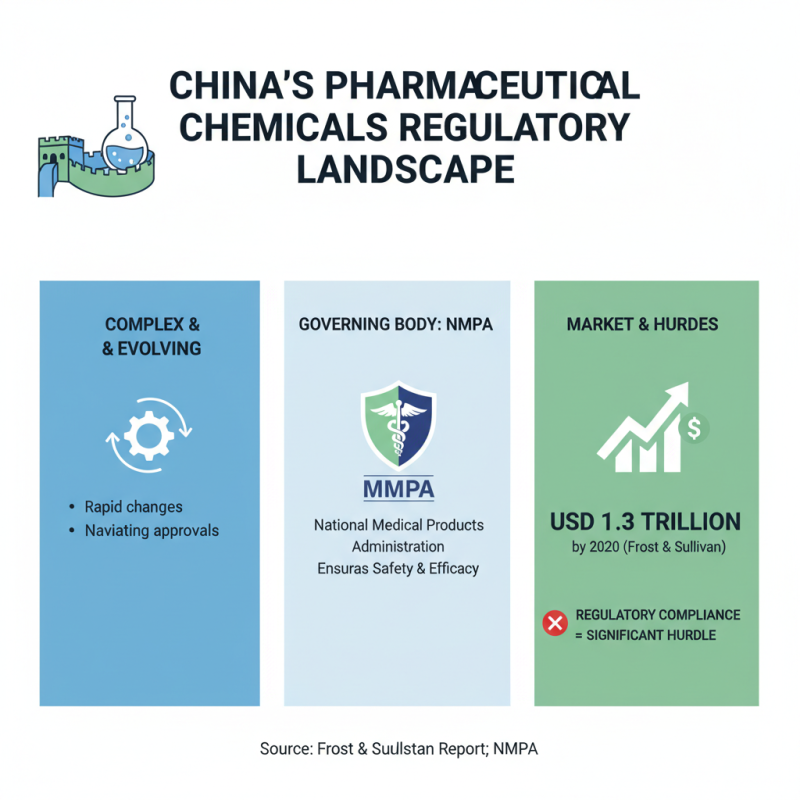
The regulatory environment for pharmaceutical chemicals in China is complex and rapidly evolving. The National Medical Products Administration (NMPA) governs this sector, ensuring that products meet safety and efficacy standards. According to a report by Frost & Sullivan, the pharmaceutical market in China is expected to reach USD 1.3 trillion by 2030, but regulatory compliance remains a significant hurdle.
Recent changes in regulations emphasize transparency and environmental sustainability. The implementation of the Chemical Registration Regulation (CRR) requires manufacturers to provide detailed data on chemical substances. Companies must therefore invest in research and development to comply with stringent standards. It's estimated that over 60% of new pharma chemicals undergo rigorous scrutiny before approval.
However, many firms still struggle with gaps in compliance. Some manufacturers may overlook the importance of thorough documentation. This oversight can lead to delays and lost opportunities in an increasingly competitive market. Reports show that up to 40% of applicants face regulatory challenges that can stall new product launches. The dynamic nature of China’s regulatory landscape calls for continuous adaptation, making it essential for companies to stay informed and agile.