How to Start Peptide API Manufacturing in 2026?
Peptide API manufacturing is set to be a pivotal industry by 2026. Renowned expert Dr. Emily Chen stated, "The future of peptide production lies in innovation and precision." As the demand for peptides in therapeutics grows, so does the urgency to adopt cutting-edge approaches.
In Peptide API manufacturing, understanding the complexities is crucial. This field requires meticulous attention to detail at every phase. From synthesis to purification, every step demands expertise and dedication. However, the journey is not without its challenges. Manufacturers must navigate fluctuating market demands and technological advancements.
The path to success in Peptide API manufacturing will involve continuous learning and adaptation. Companies must evaluate their processes and embrace new solutions. Reflection on past practices can illuminate areas for improvement. This industry offers opportunities, but it also requires significant commitment. Embracing innovation could mean the difference between thriving and merely surviving.

Understanding Peptide APIs and Their Importance in 2026
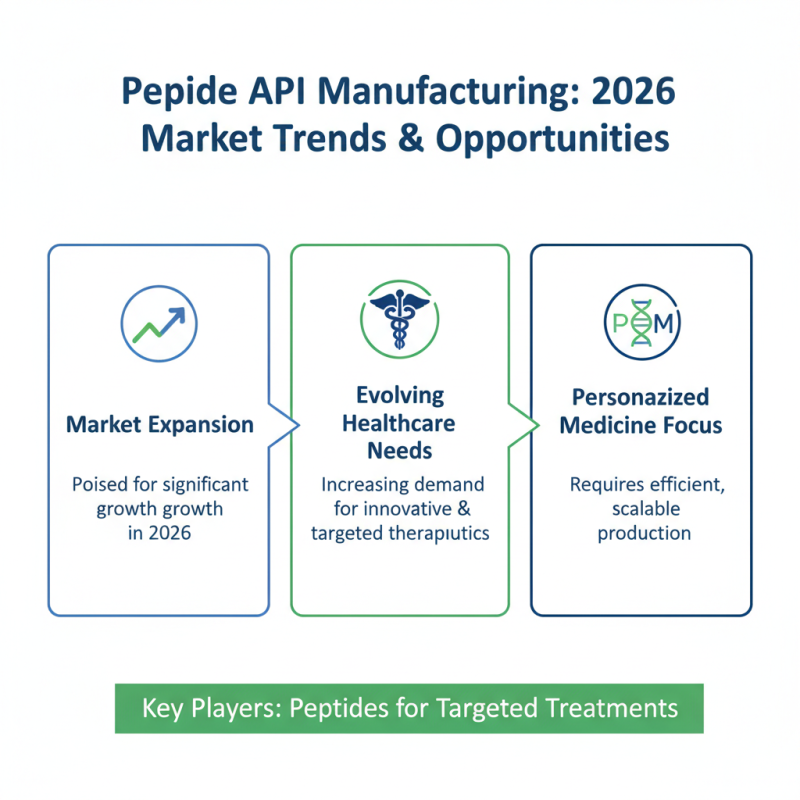
In 2026, the demand for peptide active pharmaceutical ingredients (APIs) is projected to grow significantly. The global peptide therapeutics market is estimated to reach $38 billion by 2026, according to industry reports. This growth stems from the increasing prevalence of chronic diseases, where peptide drugs demonstrate efficacy and fewer side effects compared to traditional medications.
Peptides play crucial roles in various therapeutic areas, including oncology and metabolic disorders. Their unique properties allow for targeted action. For instance, they can enhance drug delivery systems, improving bioavailability. However, the manufacturing process of peptide APIs is complex and requires specialized knowledge. Challenges persist in scaling production efficiently, ensuring quality, and navigating regulatory landscapes.
Investments in technology and research are essential. Current data shows a gap in skilled labor. The industry must address this by training professionals in peptide synthesis and purification techniques. Organizations can benefit from collaborative research, but there is still hesitation in sharing proprietary methods. This creates a barrier to innovation, which could affect future growth.
Peptide API Manufacturing Trends in 2026
Essential Regulatory Requirements for Peptide API Production
Starting peptide API manufacturing in 2026 involves navigating complex regulatory landscapes. The global peptide therapeutics market was valued at approximately $25 billion in 2022, expected to grow significantly. Manufacturers must be aware of the essential regulatory requirements governing production processes, including quality management systems and good manufacturing practices (GMP).
In the U.S., the FDA defines clear guidelines for peptide APIs. Registration, thorough documentation, and compliance with quality standards are crucial. These regulations ensure that products meet safety and efficacy standards. For example, adherence to ICH Q7 can enhance process reliability and reproducibility. Inspections can be rigorous, and any non-compliance can lead to significant delays and financial penalties.
Moreover, engaging with regulatory bodies early in the development process can be beneficial. Producing peptides is intricate; thus, small deviations in formulation can have large impacts. Therefore, constant communication is necessary to clarify regulatory expectations. Manufacturers should be prepared for potential challenges, including changes in regulations and market demands. Keeping abreast of industry trends and guidelines is crucial for success in the peptide API sector.
Steps to Establish a Peptide API Manufacturing Facility
Starting a peptide API manufacturing facility in 2026 requires careful planning and execution. First, conduct a thorough market analysis. Understand demand trends and identify your target audience. This step will help in forming a strong business plan.
Identify the right location for your facility. Accessibility to suppliers and clients is crucial. Consider proximity to skilled labor and transportation routes. These elements will influence your operational efficiency.
Tips: Invest in quality control systems. They ensure product consistency and safety. Regular audits can help maintain standards.
Next, focus on the procurement of equipment. Ensure you choose robust machinery suitable for peptide synthesis. Evaluate whether to purchase or lease the equipment. Each option has its pros and cons.
Tips: Stay updated with technology trends. Innovations in production could affect your facility’s output.
Assembling the right team is vital. Hire professionals with experience in peptide production. This expertise will contribute to effective operations. Keep an eye on employee training. This area often gets overlooked and can lead to skill gaps.
Best Practices for Quality Control in Peptide API Production
Quality control is crucial in peptide API production. Each step requires meticulous attention. From raw materials to the final product, standards must be high. Testing and verification can prevent contamination and ensure potency. Robust quality measures can be the difference between success and failure.
In 2026, adopting best practices is essential. Implement regular audits of processes. This helps identify areas needing improvement. Documenting every procedure is important. It creates a record of compliance and helps in training staff. However, mistakes can happen. It's essential to learn from them rather than overlook them. Reviewing failure points proactively can drive innovation.
Investing in advanced technologies can enhance quality control. Automation in testing can reduce human error. However, reliance on machines can overshadow human oversight. Balancing technology with skilled personnel is key. Regular training ensures everyone stays updated on methods and trends. Quality control is not just a step; it’s a mindset for producing safe and effective peptides.
How to Start Peptide API Manufacturing in 2026? - Best Practices for Quality Control in Peptide API Production
| Quality Control Aspect |
Best Practice |
Frequency |
Responsible Team |
| Raw Material Inspection |
Conduct thorough testing for identity and purity |
Every Batch |
Quality Assurance (QA) |
| In-Process Testing |
Monitor critical parameters during production |
Continuous |
Production Team |
| Final Product Testing |
Test for potency, purity, and sterility |
Every Batch |
Quality Control (QC) |
| Documentation Review |
Ensure compliance with regulatory standards |
Monthly |
Regulatory Affairs |
| Training & Development |
Regular training on quality control protocols |
Bi-annual |
Human Resources & QA |