What Are Pharmaceutical Chemicals and Their Uses?
Pharmaceutical chemicals play a critical role in healthcare. These compounds are essential for the development of medicines that treat various diseases. According to a recent report from the Global Pharmaceutical Chemicals Market, the industry is projected to grow at a rate of 6% annually. This underscores the importance of pharmaceutical chemicals in improving patient outcomes and advancing medical science.
Dr. Emily Carter, a leading expert in pharmaceutical chemistry, emphasizes, "The quality of pharmaceutical chemicals directly impacts drug efficacy and safety." This highlights the need for vigilance in how these substances are produced and used. Many products have faced scrutiny due to impurities or side effects, pointing to the necessity for continuous improvement and regulation in the sector.
Despite advancements, the industry faces challenges such as production costs and environmental concerns. There is an increasing demand for sustainable practices in pharmaceutical chemicals manufacturing. As the world moves forward, addressing these issues will be vital. It is crucial for stakeholders to reflect on how they can innovate while ensuring the safety and effectiveness of pharmaceutical chemicals.
Definition of Pharmaceutical Chemicals: Overview and Characteristics
Pharmaceutical chemicals are essential in the field of medicine. These compounds are primarily designed to prevent, diagnose, or treat diseases. They play vital roles in developing various drugs. Their effectiveness depends on their specific properties. Understanding these characteristics is crucial for researchers and professionals alike.
Different types of pharmaceutical chemicals exist. Some are active ingredients, while others serve as excipients. Active ingredients directly impact health. Excipients may not have direct therapeutic effects but are essential for drug formulation. Their roles range from stabilizing the drug to ensuring proper absorption in the body. Knowing the interaction between these components can lead to better therapeutic outcomes.
However, not all pharmaceutical chemicals are without side effects. Some may cause unexpected reactions in patients. The variability in individual responses adds complexity to treatment plans. It raises questions about safety and efficacy. Continuous research is necessary to refine these chemicals. The goal is to enhance their benefits while minimizing risks. This ongoing journey reflects the ever-evolving landscape of pharmaceutical sciences.
Classification of Pharmaceutical Chemicals: Types and Categories
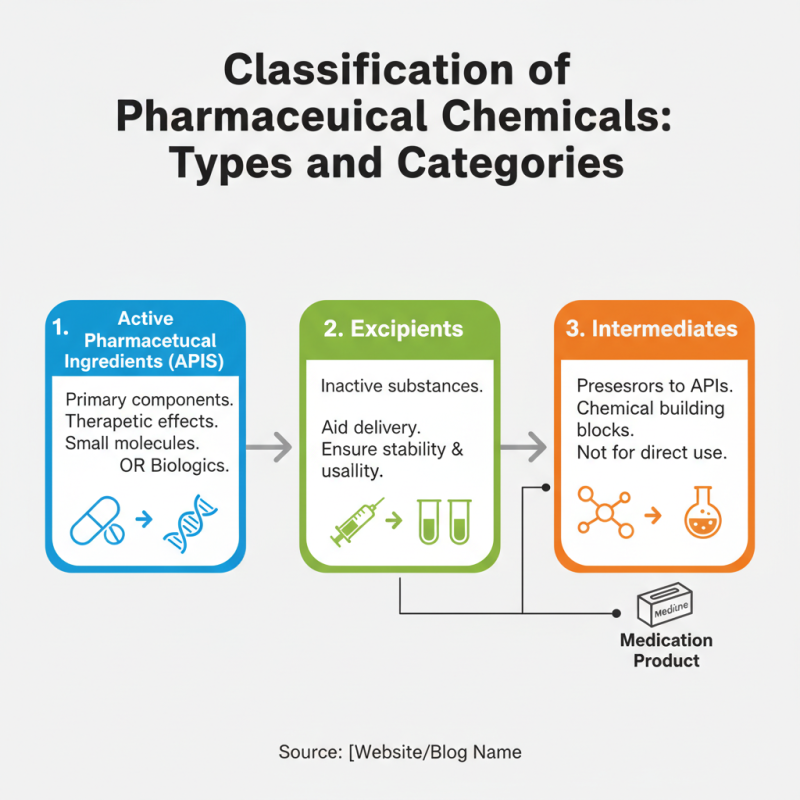
Pharmaceutical chemicals can be classified into several categories based on their properties and uses. These categories include active pharmaceutical ingredients (APIs), excipients, and intermediates. APIs are the primary components responsible for the therapeutic effects of medications. They can be small molecules or biologics. Excipients are inactive substances that help deliver the active ingredients effectively. They ensure the stability and usability of the medications.
Another important classification involves therapeutic categories. Antibiotics fight infections, while analgesics relieve pain. Antidepressants target mood disorders, and antihypertensives manage high blood pressure. Each category serves a distinct purpose and showcases the diversity of pharmaceutical chemicals. Sometimes, the distinction can blur. A substance may fit multiple classifications, leading to confusion.
The manufacture of pharmaceutical chemicals requires strict regulations and quality control. However, issues still arise in production processes. Contaminants can slip through, impacting drug safety. It's crucial for manufacturers to regularly evaluate their practices to ensure public health. Continuous improvements in these classifications and regulations could lead to safer and more effective medications.
Uses of Pharmaceutical Chemicals in Medicine and Healthcare
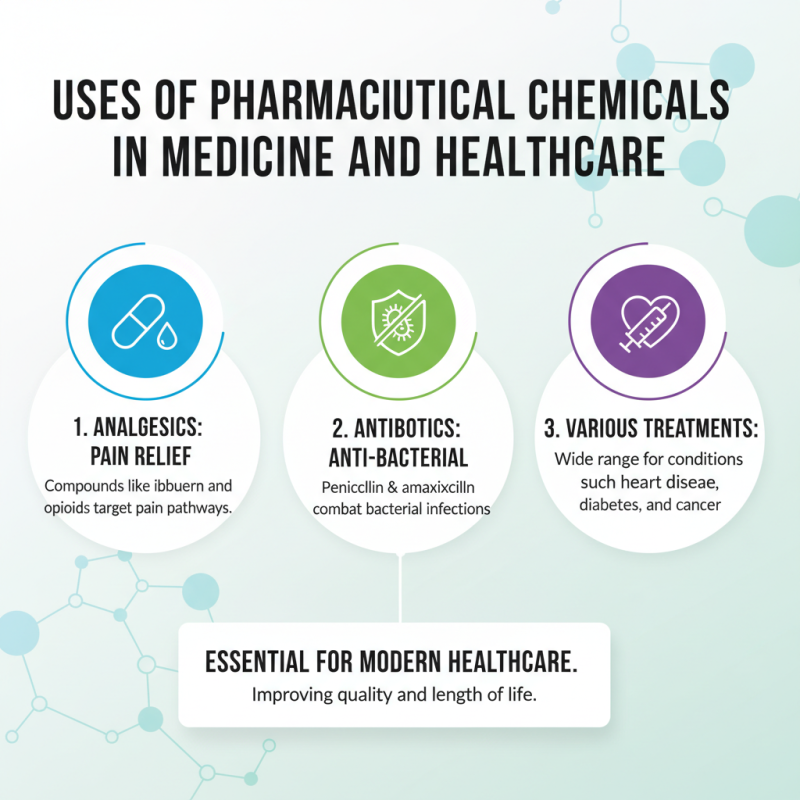
Pharmaceutical chemicals play a vital role in medicine and healthcare. These compounds are integral in the development of medications that treat various conditions. For instance, analgesics reduce pain, while antibiotics fight bacterial infections. Each class of pharmaceuticals has specific purposes and mechanisms of action.
In many cases, the effectiveness of these chemicals is closely tied to their formulation. A poorly designed drug may not deliver its active ingredients effectively. This is why ongoing research is crucial. Scientists test new combinations and dosages for better outcomes. Challenges, like drug resistance, remind us that the field is continuously evolving.
The use of pharmaceutical chemicals extends to diagnostics as well. Contrast agents in imaging help visualize organs. Vaccines utilize adjuvants to enhance immune response. Yet, there's a need for transparency about side effects. Informed consent remains essential, yet often overlooked. Awareness and education can bridge this gap, empowering patients to make better choices.
Regulatory Framework: Safety and Efficacy Standards for Pharmaceutical Chemicals
The regulatory framework for pharmaceutical chemicals is crucial. It ensures safety and efficacy. Numerous studies highlight the need for strict standards.
According to the World Health Organization, over 50% of medications fail quality tests. This statistic underlines the importance of effective regulations.
In many countries, agencies like the FDA regulate pharmaceutical chemicals. They set rigorous testing protocols. These tests assess toxicity, pharmacokinetics, and potential side effects.
A recent report from the European Medicines Agency stated that nearly 35% of new drugs faced delays due to compliance issues. Such setbacks show that regulations are necessary yet challenging.
But challenges remain. Harmonizing regulations across regions can be difficult. Discrepancies can lead to unsafe drugs entering markets. It is vital for stakeholders to reflect on these issues. Addressing these gaps could enhance patient safety globally. Regulatory frameworks must adapt to current scientific advancements.
Future Trends: Innovations and Developments in Pharmaceutical Chemistry
The landscape of pharmaceutical chemistry is evolving rapidly. Researchers are focusing on innovative methods to synthesize more effective compounds. Emphasis is now placed on precision medicine. This personalized approach tailors drugs to individual genetic profiles. As a result, treatments become more effective and have fewer side effects.
Emerging technologies are revolutionizing the field. Artificial intelligence is now playing a crucial role. AI helps predict how drugs interact within the body. This accelerates the discovery of new formulations. However, the integration of such technology is not without challenges. The complexity of data can lead to misuse if not handled properly. Ethics must be a priority as we navigate this digital age.
Sustainability is another key focus in pharmaceutical chemistry. Researchers are looking for eco-friendly alternatives to traditional manufacturing processes. This shift aims to reduce environmental impact. Yet, finding a balance between innovation and sustainability is tricky. There are still significant hurdles to overcome. Collaborations across disciplines may hold some answers, but the path remains fraught with uncertainty.
Pharmaceutical Chemicals and Their Uses
This bar chart represents the different categories of pharmaceutical chemicals and their approximate usage percentages in the industry. The categories include Active Pharmaceutical Ingredients (APIs), Excipients, Biologics, and Over-the-Counter (OTC) Drugs. The data reflects current trends and innovations in pharmaceutical chemistry.