

Best Pharmaceutical Intermediates for Global Buyers Seeking Quality?
page_banner

Best Pharmaceutical Intermediates for Global Buyers Seeking Quality?

In the ever-evolving landscape of pharmaceuticals, sourcing high-quality pharmaceutical intermediates is critical. These intermediates are essential building blocks for active pharmaceutical ingredients (APIs), facilitating effective drug production. Global buyers face the challenge of navigating numerous suppliers to find reliable sources.

Quality assurance is vital in this process. Not all suppliers meet stringent regulations. The importance of consistent quality cannot be overstated, as it directly impacts drug efficacy and safety. Potential buyers should thoroughly assess suppliers’ qualifications and track records.

Market dynamics add complexity. Fluctuations in demand and regulatory changes can affect availability and pricing of pharmaceutical intermediates. Buyers must stay informed about these shifts. Engaging with experienced partners enhances understanding and accessibility of quality intermediates. This relationship fosters trust and reliability in the supply chain, crucial for successful pharmaceuticals.

Best Pharmaceutical Intermediates for Global Buyers Seeking Quality?

Overview of Pharmaceutical Intermediates and Their Importance

Pharmaceutical intermediates play a crucial role in the production of active pharmaceutical ingredients (APIs). These intermediates are essential building blocks in drug formulation. According to a recent industry report from Grand View Research, the global pharmaceutical intermediates market is projected to reach $23.6 billion by 2028, reflecting a compound annual growth rate (CAGR) of 6.2% from 2021.

The importance of selecting high-quality intermediates cannot be overstated. Quality directly impacts the efficacy and safety of final drugs. Companies must ensure that their intermediates meet rigorous standards. The U.S. Food and Drug Administration (FDA) and the European Medicines Agency (EMA) both emphasize quality control in pharmaceutical production. Failure to adhere to these standards can result in serious consequences, including product recalls.

Tip: When sourcing intermediates, consider suppliers with ISO certification. This often indicates a commitment to quality and safety. Additionally, assess the supplier's track record in compliance with regulatory standards.

In a rapidly evolving market, staying informed is vital. New intermediate compounds are continuously being developed. This innovation can improve drug formulations but may also introduce complexity in sourcing. Continuous evaluation of the supply chain is necessary to ensure quality and reliability. As buyers, being proactive about quality control helps mitigate risks associated with pharmaceutical intermediates.
Key Qualities to Look for in Pharmaceutical Intermediates

When evaluating pharmaceutical intermediates, quality is paramount. Buyers should first consider the source of raw materials. Trusted suppliers often provide transparent information about their sourcing practices. This builds credibility and trust. Look for certifications that indicate a commitment to quality standards. These certifications help ensure the integrity of the intermediates.

Additionally, examine the production processes. Advanced manufacturing technologies can significantly impact the quality of intermediates. Efficient processes often lead to fewer impurities. It’s essential to understand how these processes affect the final product. However, not all suppliers disclose this information readily, which can lead to uncertainty in quality.

Another critical quality is consistency. Reliable intermediates should deliver uniform results in each batch. Variability can affect downstream applications and may lead to unexpected outcomes. Reflecting on past experiences with suppliers can provide valuable insights into consistency. Buyers need to weigh not just the immediate benefits but also long-term implications.

Best Pharmaceutical Intermediates for Global Buyers Seeking Quality
Intermediate Name Purity Level (%) Common Applications Regulatory Compliance Supplier Certification
Acetic Acid 99.9 Pharmaceuticals, Food Additives FDA, ISO GMP, ISO 9001
Benzyl Alcohol 99.5 Solvent, Preservative USP, EP FSSC 22000
Dimethylformamide (DMF) 99.0 Solvent, Reagent REACH, OSHA ISO 14001
Ethyl Acetate 99.8 Extraction, Solvent FDA, EINECS CQAP
Isopropyl Alcohol 99.9 Antiseptic, Solvent FDA, USP ISO 9001

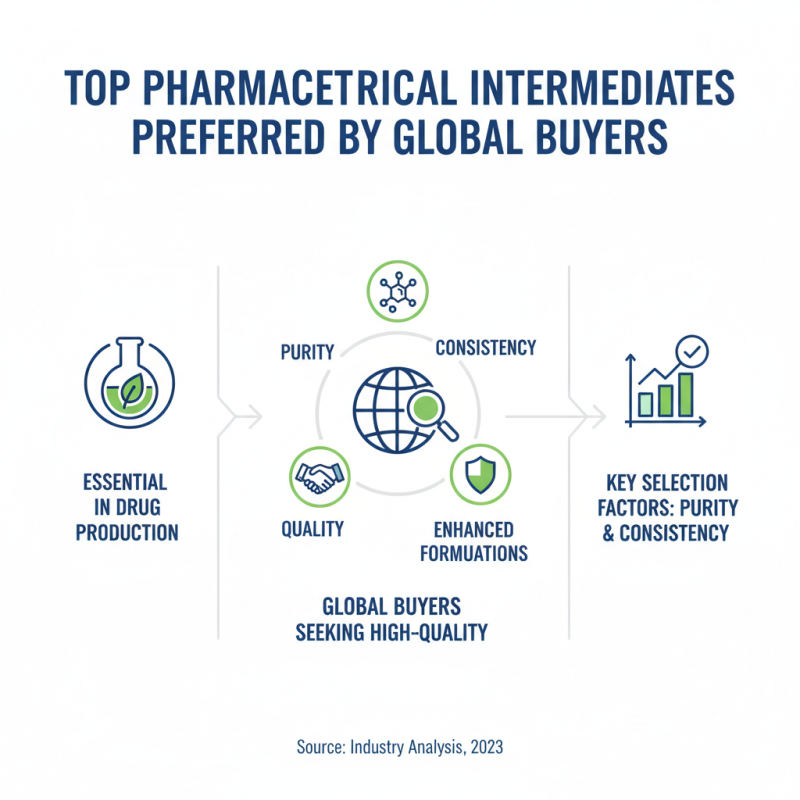
Top Pharmaceutical Intermediates Preferred by Global Buyers

Best Pharmaceutical Intermediates for Global Buyers Seeking Quality?

Pharmaceutical intermediates are essential in drug production. They play a critical role in developing effective medications. Global buyers are increasingly seeking high-quality intermediates to enhance their formulations. A key factor in choosing intermediates is their purity and consistency. Buyers often evaluate suppliers based on these parameters.

Commonly preferred intermediates include those with robust supply chains and proven track records. Buyers look for intermediates that show stability during storage and transport. Quality control processes should be transparent. Lack of such clarity can lead to potential issues. Transparency fosters trust in the supply chain.

However, not all intermediates are created equal. Some may degrade over time. Others might have inconsistencies that impact end products. Awareness of these variables is crucial. Buyers must be diligent in their sourcing strategies. It's a balancing act between cost and quality. The right choice can significantly influence therapeutic outcomes.

Factors Influencing the Selection of Pharmaceutical Intermediates

When selecting pharmaceutical intermediates, buyers must consider several key factors. Quality is paramount, as it directly influences the efficacy of the final product. According to industry reports, 70% of manufacturers prioritize suppliers with established quality assurance protocols. This emphasis on quality is not just about compliance; it impacts production efficiency and patient outcomes.

Cost is another significant factor. Buyers often look for competitive pricing without sacrificing quality. A recent study found that 65% of buyers are willing to pay a premium for intermediates that demonstrate consistent reliability. This reflects a growing awareness that short-term savings can lead to long-term issues.

Transparency in the supply chain is critical. Many buyers prefer partners who share insights into their processes. Open communication fosters trust. A lack of transparency can raise red flags. This is especially true when quality control measures aren't disclosed. Without clarity, buyers may face challenges that could jeopardize their manufacturing timelines. Hence, finding the right pharmaceutical intermediates involves balancing quality, cost, and trust in suppliers. This decision-making process remains complex and requires careful evaluation.

Best Pharmaceutical Intermediates for Global Buyers Seeking Quality

Future Trends in Pharmaceutical Intermediates for Global Markets

Best Pharmaceutical Intermediates for Global Buyers Seeking Quality?

The pharmaceutical intermediates market is evolving rapidly. According to a recent report by MarketsandMarkets, the global pharmaceutical intermediates market is projected to reach USD 46.5 billion by 2026, growing at a CAGR of 8.5%. This growth is primarily driven by increasing demand for quality intermediates, spurred by healthcare innovations.

Emerging trends indicate a shift towards synthesizing green and sustainable intermediates. Pharmaceutical companies are increasingly focusing on reducing their environmental footprint. Innovations in biocatalysis and flow chemistry are expected to lead this trend. However, this can pose challenges. Traditional manufacturing processes might need significant adjustments. Industry players must adapt their technologies to meet these demands.

Regulatory compliance remains a critical concern. The FDA and other global agencies are tightening regulations. Companies must invest in quality control and risk management. Failure to comply can lead to severe consequences. The competition for high-quality intermediates is intense. Firms that effectively navigate these complexities will succeed. The market's future lies in the balance of innovation and compliance.